
Caregiver Guilt After Death: When the Grief Doesn't Stop
This article is for informational purposes only and does not constitute professional mental health advice or create a therapist-client relationship.
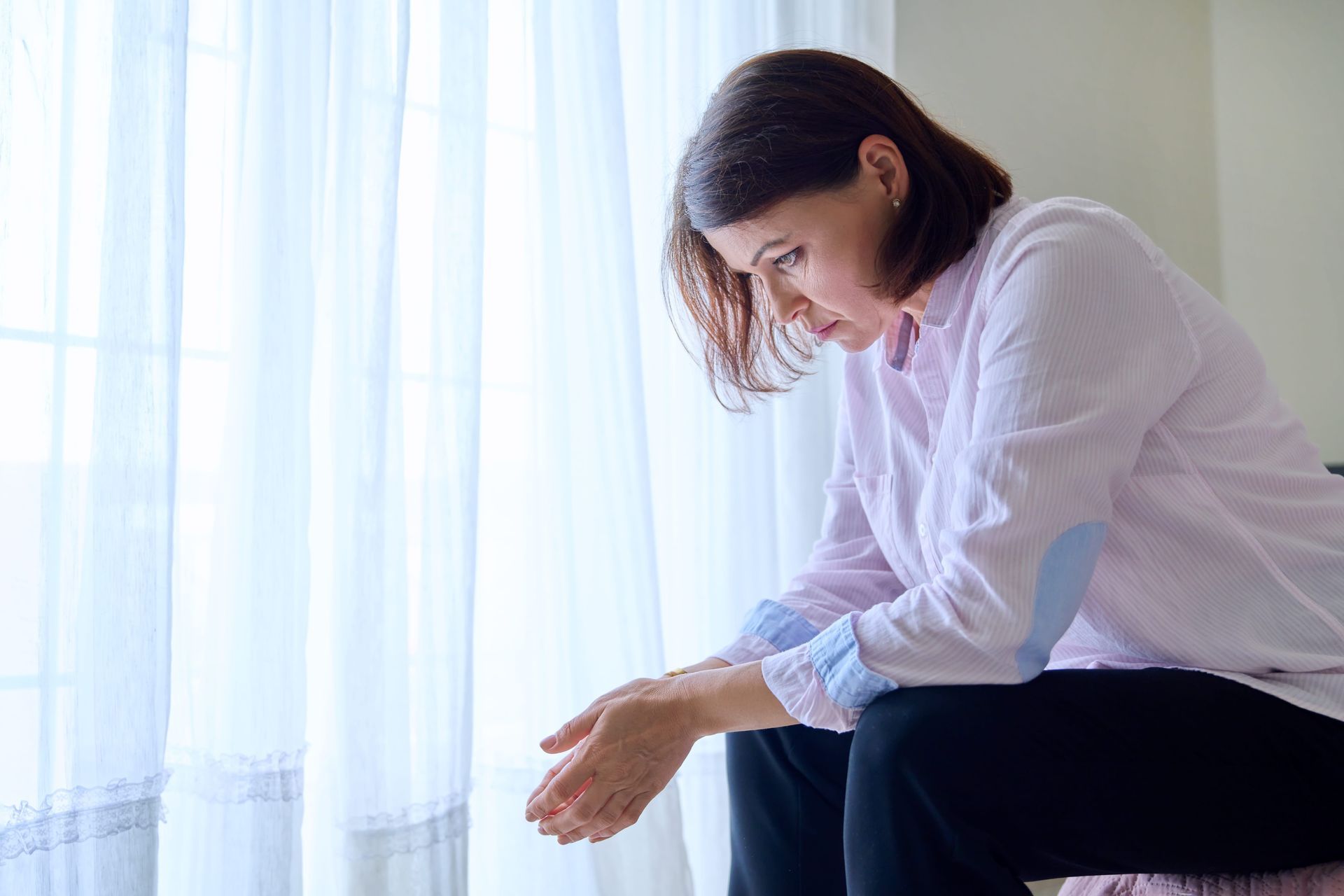
You expected grief. What you didn't expect was the guilt.
After months or years of caregiving, showing up every day, losing sleep, putting your own life on hold, you thought that when your loved one died, you might finally be able to breathe. What many caregivers find instead is that grief after the death of a loved one comes tangled with something harder to name: guilt. Sometimes so much of it that the grief almost gets lost underneath.
If that's where you are right now, I want you to know: it makes complete sense, it doesn't mean you did anything wrong, and you don't have to carry it alone.
I'm Jenna Rumberger, a Licensed Independent Clinical Social Worker with 13 years of clinical experience and the founder of Aging with a Plan, PLLC in Redmond, Washington. My grandmother lived with Alzheimer's disease for over a decade, and my mother was her caregiver. My family's experience with Alzheimer's disease and caregiving deeply informs the work I do today.
Why Caregiver Guilt After Death Is So Common
Caregiving puts you in an impossible position, again and again. There are no perfect options. When your loved one needs more care than you can give, when you have to choose between a hospitalization and hospice care, when you have to place someone you love in assisted living or memory care placement because you can no longer keep them safe at home, these are decisions with no right answer. Therapists sometimes refer to this as moral distress : the weight of having to make impossible choices where something important is lost no matter what you decide. Caregivers carry that weight long after caregiving ends, sometimes long after a loved one has passed.
When a loved one dies, the mind replays everything. Times you were impatient. Decisions you second-guess. Moments when caregiver stress had built to the point where you were too depleted to show up the way you wanted to. One of the things I hear most often from bereaved caregivers is: "I keep thinking about what I could have done differently." Guilt is real, and that loop, quiet at first, then relentless, is caregiver guilt after death. Feeling caregiver guilt doesn't mean you failed. It usually means you cared deeply.
The guilt often centers on a few specific places:
Whether you did enough. A care decision that still feels uncertain. A conversation you wish you'd had. Feelings of guilt and regret about whether you visited enough, whether you asked the right questions, whether you could have done enough to change the outcome. The thought "I didn't do enough" can become relentless. The Family Caregiver Alliance recognizes this as one of the most universal experiences among bereaved family caregivers, and one that can persist long after the death.
Feeling relief. One of the most painful forms of caregiver guilt after death is the sense of relief that caregiving is over. Guilty feelings that say if you're relieved, you couldn't have really loved them. You did. A sense of relief after sustained, intense caregiving is a completely human response to the end of an extraordinarily hard chapter. Relief and profound grief can coexist, many caregivers said this was the hardest thing to admit out loud, and the most important.
End-of-life decisions. Caregivers who chose hospice care, who moved a loved one into a senior living community, who made calls about the level of medical intervention, these decisions can carry intense guilt. They were made under pressure, without perfect information, in service of someone you loved. That context matters, even when the guilt says otherwise.
Not being there. Many caregivers weren't in the room when their loved one died, and carry guilt about their person passing without them present. This is one of the most common things I hear from bereaved caregivers, and one of the heaviest.
Survivor's guilt. Some caregivers, especially spousal caregivers, experience something close to survivor's guilt: "Why am I still here and they're not." Guilt about moving forward. Guilt about eventually finding moments of peace. This is a real and recognized part of the grieving process after long-term caregiving.
Why Caregiver Guilt Makes Grief So Hard
Guilt and grief are related, but they need different things. When guilt takes up all the space, the actual grief of losing your person can get buried underneath.
I see this regularly: bereaved caregivers who are clearly in grief but can't access it because they're so caught in the loop of what they did or didn't do. The guilt becomes a barrier to the grieving process itself.
What makes it harder is that the people around you may not understand it. Family members and friends may expect you to feel relief now that caregiving has ended. They may not realize that, for some caregivers, intense or persistent guilt can complicate the grieving process or occur alongside concerns such as depression, anxiety, or prolonged grief disorder. Prolonged grief disorder involves grief that remains intense and persistent over time and significantly interferes with daily functioning. Research on bereaved caregivers has found that while many caregivers adjust over time, some experience ongoing depression, prolonged grief, or other significant emotional distress after their loved one dies. Some caregivers also experience post-traumatic stress symptoms, particularly those who experienced traumatic moments at end of life, or those who carry guilt about death alone, about not being present when their loved one passed.
Dealing with grief is hard enough. Dealing with guilt and grief at the same time, without support services designed for this type of loss, is one of the heaviest things caregivers carry. It also tends to be invisible, no one brings food because you're struggling with a feeling that's hard to name.
There's also a loss that often goes unnamed: the caregiving role itself. After years of structuring your life around someone else's needs, caregiving ends and suddenly you don't know who you are outside of it. The loss of purpose, routine, and identity that comes when caregiving ends is a real form of grief, and it can arrive alongside the guilt in ways that make both harder to carry.
What Helps With Caregiver Guilt After Death
The guilt won't lift on its own just because time passes. But these things genuinely help:
Name it specifically. Vague guilt is harder to move through than specific guilt. What moments are replaying? What decisions are you second-guessing? Getting specific, writing it down, saying it out loud to a therapist or trusted person, is the beginning of coping with caregiver guilt. Naming it gives you something to actually work with.
Allow yourself to feel the grief underneath. When caregivers begin to address the guilt, they often find the grief of losing their loved one becomes more accessible. That grief is normal grief, it deserves space. And it tends to move more freely once the guilt has some room.
Find people who understand. A support group for bereaved caregivers offers something family members and friends often can't: the experience of being understood without explanation. Support from family matters too, but there's something specific about people who have carried the same weight of caring for a loved one and are navigating the same grief and guilt.
Reach out for professional help. If caregiver guilt feels persistent, overwhelming, or is making it difficult to move through your grief, you don't have to work through it alone. The weight of guilt carried alone is heavier than guilt that has somewhere to go. Therapy or other bereavement support can provide a space to process what you're carrying. That's not weakness. It's good judgment.
How Therapy Helps With Grief and Guilt After Caregiving Ends
Many bereaved caregivers come to therapy after months of trying to manage this alone. They've heard "you did everything you could" from the people who love them, and found it doesn't touch the guilt. What they need isn't reassurance, it's a space to actually work through what they're carrying.
In therapy, we look at the specific moments that replay, not to dismiss accountability, but to see those moments accurately rather than through the distorting lens of guilt. Dealing with guilt directly, rather than waiting for it to lift, is how the grief underneath becomes accessible. We make room for the moral distress of having faced impossible decisions, the death and dying that came at the end of a long caregiving journey, the decisions made in hospice or at end of life. We make space for grief: the grief of losing the loved one in your life, and the grief of losing the caregiving role itself, the loss of purpose and identity that comes when that chapter closes.
For dementia caregivers especially, this work often connects to anticipatory grief, grief that began long before your loved one's death. That grief process deserves acknowledgment too, not just the bereavement that came after.
I draw on Cognitive Behavioral Therapy (CBT), Acceptance and Commitment Therapy (ACT), and supportive bereavement approaches, depending on what you need.
Learn more about family caregiver therapy on my services page, or read related posts on caregiver grief and grieving the partner you once knew.
Questions About Caregiver Guilt After Death
Is it normal to feel guilty after a loved one dies?
Yes, and it's especially common for caregivers. When you've been responsible for someone's care, the death of a loved one often triggers a review of every decision and every moment. Guilt after death is a normal part of grief for caregivers, not evidence that you failed. It usually means you loved someone deeply and held yourself to a standard no one could fully meet.
Is feeling relief after a loved one dies normal?
Yes. A sense of relief after sustained caregiving is a human response to the end of something extraordinarily hard, not a measure of how much you loved your person. Caregivers often feel immediate guilt about feeling relief, as if it means the love wasn't real. It doesn't mean that. Relief and profound grief can coexist. Many caregivers find that accepting the relief, rather than fighting it, allows the grief of losing their loved one to move more freely.
You Cared. That's What's True.
The guilt you're carrying is real. So is the love that drove every decision you made.
You showed up. You faced decisions with no right answer. You kept going when the caregiving journey was far harder than anyone prepared you for. That's not a small thing.
If you're ready to talk, I offer a free 20-minute introduction call with no pressure and no obligation. Reach me through the contact page or call (425) 270-7336.
Aging with a Plan, PLLC serves family caregivers in Redmond, Bellevue, Kirkland, Sammamish, and virtually throughout Washington State.
Ready to get Started?
Recent Posts





Share this Article
Found this helpful? Share it with someone who might need to read it, too.

Meet The Author
Jenna Rumberger, LICSW, specializes in supporting adults living with dementia, Alzheimer’s disease, and Parkinson’s, as well as their family caregivers. She provides in-person therapy in Redmond and
Bellevue, telehealth throughout Washington State, and home visits on the Eastside of Seattle. Drawing on personal experience and more than 13 years of professional experience, Jenna helps clients navigate anxiety, stress, grief, guilt, and more.